Seamless Seamless.AI
Products Resources Pricing Sign up free
Seamless MCP Server
Products · 7 mins to read

Native MCP Server Makes Seamless AI Integration Possible

Seamless Team May 6, 2026

It’s no surprise that sales teams are adopting AI faster than ever. They are using tools like Claude, ChatGPT, and other AI assistants to write emails, summarize research, score leads, prepare for calls, and improve productivity.

But, there was still a missing piece in the sales process that no one had solved for yet: reliable and updated sales data.

AI assistants are powerful, but they need accurate context and access to be useful in real revenue workflows. A generic AI model may know how to write a cold email, but it does not automatically know which prospects match your ICP, what contacts have verified emails, where accounts are missing key CRM fields, or when buyers are most relevant for your campaign.

That is why Seamless built a MCP Server. Seamless MCP Server connects existing AI-powered workflows through the Seamless API to provide the sales intelligence data that teams need to find contacts, enrich records, build lists, and act on accurate B2B contact information.

Connecting Seamless to AI Apps Like Claude Improves Output

The problem with that workflow is because without connected sales data, these AI assistants often require manual context. A rep has to paste in prospect details, company information, CRM notes, or enrichment data before the AI can produce a useful answer.

That means sales teams can use AI tools more effectively for workflows such as:

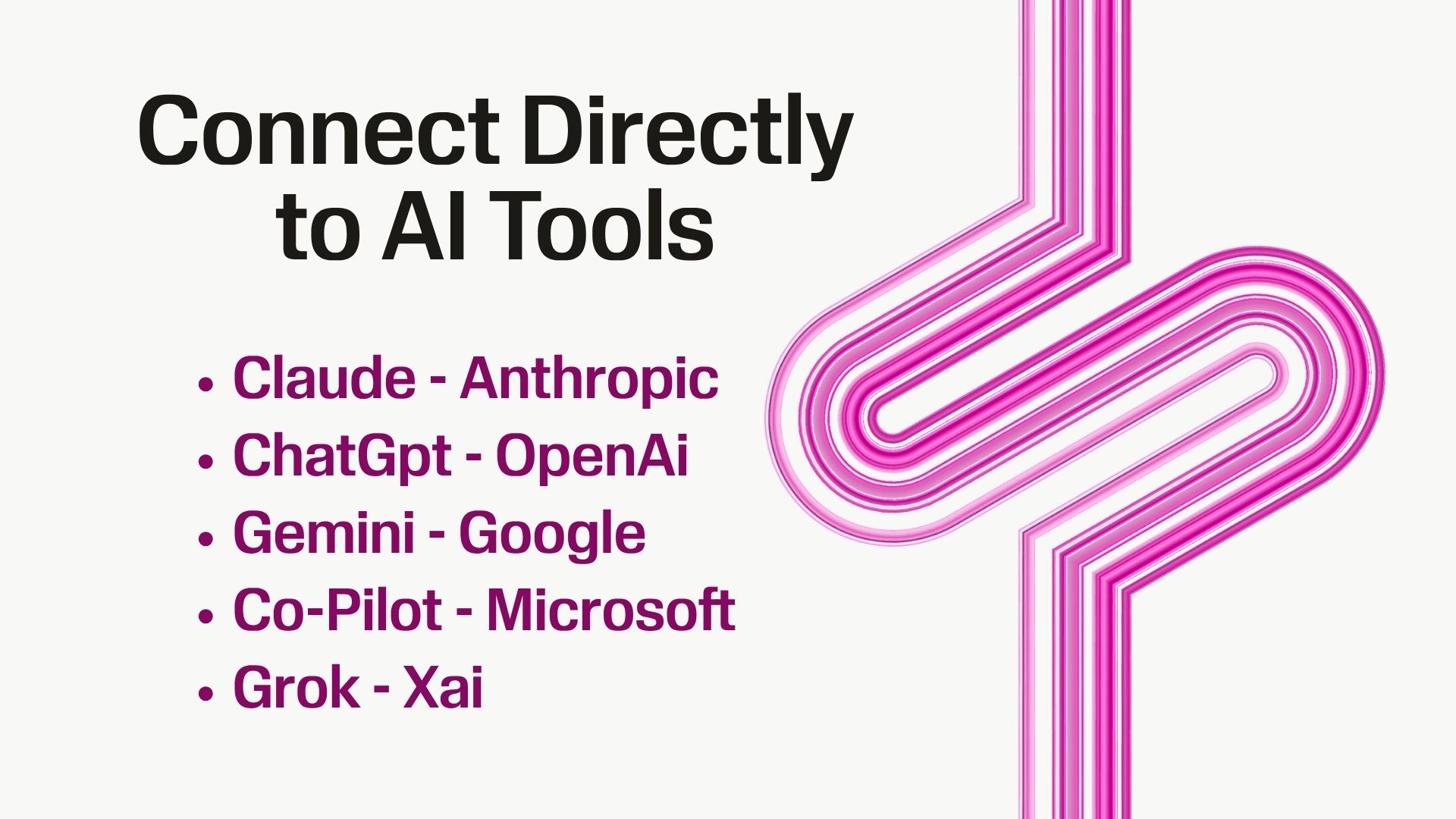
Seamless MCP integrates AI tools

Seamless MCP Server Benefits

Without Seamless MCPWith Seamless MCP
AI gives generic sales adviceAI can use Seamless-powered sales context
Reps manually copy prospect data into AI toolsReps can access sales intelligence through connected AI workflows
Prospecting requires multiple disconnected toolsProspecting can become more conversational and automated
Outreach is based on limited contextOutreach can be informed by contact and company data
CRM enrichment requires manual exports and cleanupAI workflows can help identify and enrich missing fields

Examples of Sales Prompts for Prospecting

Prospecting Prompts

  • “Find sales leaders at B2B SaaS companies with 100-500 employees in North America.”
  • “Build a list of RevOps leaders at companies using Salesforce.”

Enrichment Prompts

  • “Enrich this list with business emails and direct phone numbers.”
  • “Identify CRM records that are missing key contact data.”
Learn more about Seamless MCP
Learn more about how MCP can help your sales teams by talking with one of our reps today with a demo or sign-up for a free account to get 50 credits to try it now.
Title is a filing label. “Native MCP Server Makes Seamless AI Integration Possible” announces a feature. It doesn’t name the reader’s problem or create a curiosity gap.
Caveat opener. “It’s no surprise that sales teams are adopting AI faster than ever” — a truism the reader already knows. The team is the subject. The reader is absent from the first three paragraphs.
Feature-first language throughout. Every section describes what the product connects and enables. Zero sentences name what the rep stops doing manually or how many minutes they save per prompt.
Flat workflow hierarchy. Nine workflow types in a flat bullet list with identical visual weight. No signal on where to start or what delivers value fastest.
Comparison table uses “can” language. “AI can use Seamless-powered context” — modal verbs signal possibility, not proof. The reader needs to know what actually changes.
Dead-end CTA. “Learn more” and “Get a demo” are company-owned actions. No ownership language. No specific promise. No reason to act now vs later.
Seamless Seamless.AI
Run my first MCP prompt →
Products · May 2026

Your AI assistant is running on guesswork.
Seamless MCP fixes the data layer.

Every time your rep asks Claude or ChatGPT for help, they spend 3–5 minutes copy-pasting prospect details before getting a useful answer. Seamless MCP eliminates that step — connecting your AI tools directly to verified B2B data, so every prompt starts with real context.

3–5 min
saved per AI prompt
9+
workflow types automated
6,000+
tool integrations
Run my first MCP prompt → 50 free credits, no card required

Before MCP: 3–5 minutes of manual setup before every prompt

Your reps are already using Claude and ChatGPT every day. The workflow looks like this: rep opens AI tool, types the task, AI asks for context, rep opens three other tabs, copies prospect details, company information, CRM notes, pastes everything in, then finally gets a useful answer.

That’s 3–5 minutes of setup per prompt — repeated every time a rep needs AI to do anything useful with a real account. Seamless MCP removes that entirely.

Seamless MCP integrates AI tools
Without Seamless MCPWith Seamless MCP
Rep manually copies prospect data into AI before every promptAI pulls verified contact data from Seamless automatically
AI gives generic advice based on whatever the rep remembered to pasteAI uses live Seamless sales intelligence — verified emails, firmographics, job data
Prospecting requires 3–4 disconnected tools open simultaneouslyProspecting runs from a single conversational prompt in the AI tool the team already uses
Outreach drafted without verified contact or company dataOutreach informed by real prospect records — personalisation at scale without manual research
CRM cleanup requires manual exports, formatting, and re-importAI identifies and enriches missing CRM fields via natural language — no exports required
START HERE
Three workflows that pay off fastest — then build from there
Start with the three workflows where manual research costs your reps the most time. The rest follow once the connection is running.
Prospect list building — find decision-makers matching your ICP without leaving the AI window
Contact enrichment — fill missing emails, phone numbers, and job titles in seconds
Pre-call preparation — get a verified brief on any account before picking up the phone
Also: account research, territory planning, sales messaging, CRM cleanup, lead prioritisation

Prompts that work — with what comes back

Prospecting
“Find 25 VP-level sales contacts at B2B SaaS companies with 100–500 employees in North America. Include verified emails and direct dials.” → Returns enriched contact list in under 10 seconds.
“Build a list of RevOps leaders at Salesforce customers with 200+ employees. Flag anyone who changed roles in the last 90 days.” → Prioritised list with job-change signals at the top.
Enrichment
“Enrich these 50 contacts with verified business emails, direct phone numbers, and current job titles. Flag outdated records.” → Fills gaps without leaving the AI window. A 20-minute manual task in 30 seconds.
Pre-call research
“Create a 3-minute pre-call brief for [Company]. Include decision-makers, recent news, likely pain points, and 2 personalised opening angles.” → Call-ready brief before the rep finishes their coffee.
❌ Before — Title

Native MCP Server Makes Seamless AI Integration Possible

Announces a feature. Reads like a press release header. No reader problem named, no curiosity gap. A sales rep scanning the blog has no reason to click.

✅ After — Title

Your AI assistant is running on guesswork. Seamless MCP fixes the data layer.

Names the reader’s operational reality in the first clause. Creates a gap they need to close. The reader is the subject — not the product.

The 6 structural fixes — and why they work
1 · Title: consequence-first over filing label
The original could be a folder name. It describes the product, not the reader’s problem. The rebuild opens with the reader’s operational reality — AI running on guesswork — then delivers the solution. Curiosity gap formula: [problem the reader is already experiencing] + [what changes].
2 · Lead: reader-first hook over caveat opener
“It’s no surprise that sales teams are adopting AI” is a truism. The rebuild opens with what the rep is physically doing right now: copy-pasting context before every prompt. Naming that specific action earns trust before asking for attention.
3 · Language: outcome-first over feature-first
The original describes what Seamless MCP connects and enables. It never names what the rep stops doing or how many minutes they recover. The rebuild translates every feature into a specific operational change: “A 20-minute manual task in 30 seconds.”
4 · Structure: priority hierarchy over flat list
Nine workflows in a flat bullet list creates paralysis. The rebuild identifies the three that deliver fastest time-to-value and leads with those. Everything else is listed below, available but not competing for attention. The reader has a clear entry point.
5 · Comparison table: proof over possibility
The original uses “can” language throughout — modal verbs signal potential, not proof. The rebuild removes every “can” and states the actual change: “AI pulls verified contact data automatically.” The reader needs to see what happens, not what might happen.
6 · CTA: ownership language over company-owned actions
“Get a demo” is an action the company owns. “Run my first MCP prompt →” is an action the reader owns. The reader is already inside the task before they click. The specific promise — 50 free credits, no card — removes the last objection before it forms.
This is the Strategic Flow method applied to product updates
Same content. Same product. Different architecture. The reader outcome leads the feature spec. The comparison shows what actually changes, not what might change. The CTA uses ownership language with a specific promise. Visit strategicflow.carrd.co to run your own teardown.
← Back to all teardowns